
Waterloo Region’s Water Supply Faces Challenges as Population Grows
A growing population, limited groundwater, and tough decisions ahead.
3/1/20262 min read
As World Water Day approaches, concerns about Waterloo Region’s long-term water supply are growing after the region identified future capacity challenges.
While residents continue to have access to drinking water, experts and regional officials say the area’s heavy reliance on groundwater could create challenges as the population continues to grow.
Where Does Waterloo’s Water Come From?
Unlike many Ontario communities that rely on large lakes, the Region of Waterloo primarily depends on groundwater. More than 100 municipal wells supply approximately 75 to 80 per cent of the region’s drinking water, while the Grand River provides the remainder.
Groundwater provides a reliable, high-quality source of drinking water. However, groundwater systems have limitations. Rainfall and natural filtration replenish aquifers slowly, and the process can take years.
The Region of Waterloo projects its population will reach 1 million residents by 2051. As the population grows, water demand will continue to increase, requiring the region to plan for future supply needs.
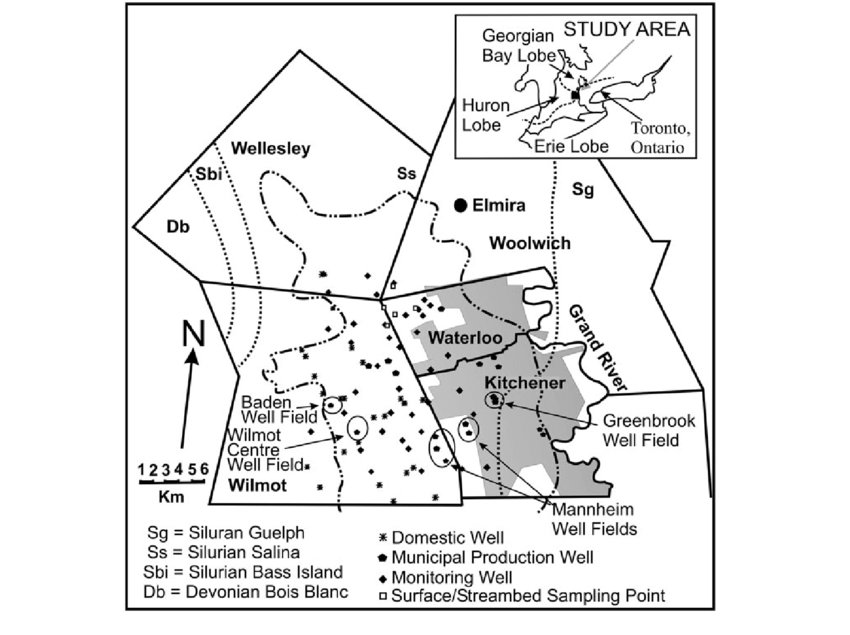
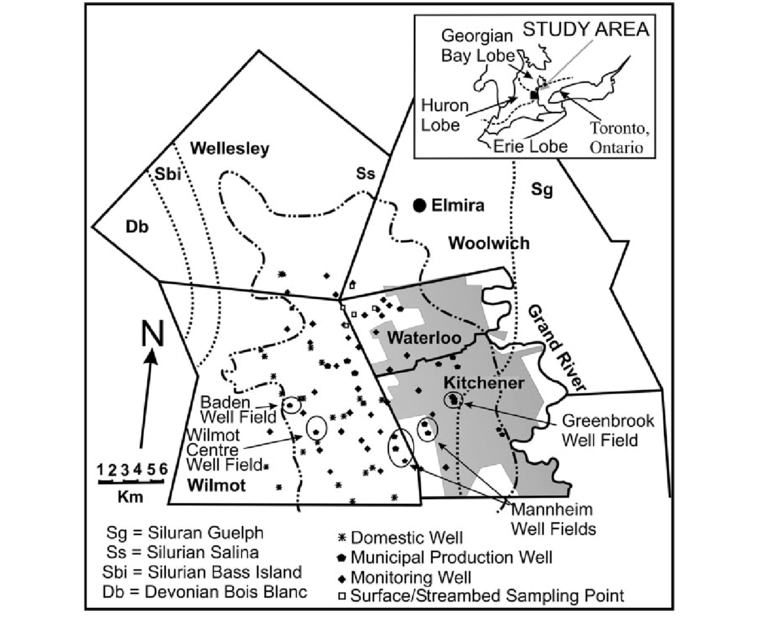
Map showing the location of municipal wells in Waterloo Region in 2014. (University of Waterloo/Lori Labelle)
A regional water strategy review identified capacity challenges in the Mannheim Service Area, which supplies water to the City of Kitchener, the City of Waterloo and surrounding townships.
At a December press conference, regional officials discussed the need to explore additional water sources and infrastructure improvements to support future growth.
Climate Change Adds Pressure
Climate variability is another factor affecting groundwater systems. Longer dry periods and changing rainfall patterns can influence how quickly aquifers are replenished.
Southern Ontario has experienced drought conditions and seasonal drought warnings in recent years. If dry periods become more frequent, groundwater-dependent communities may face additional challenges.
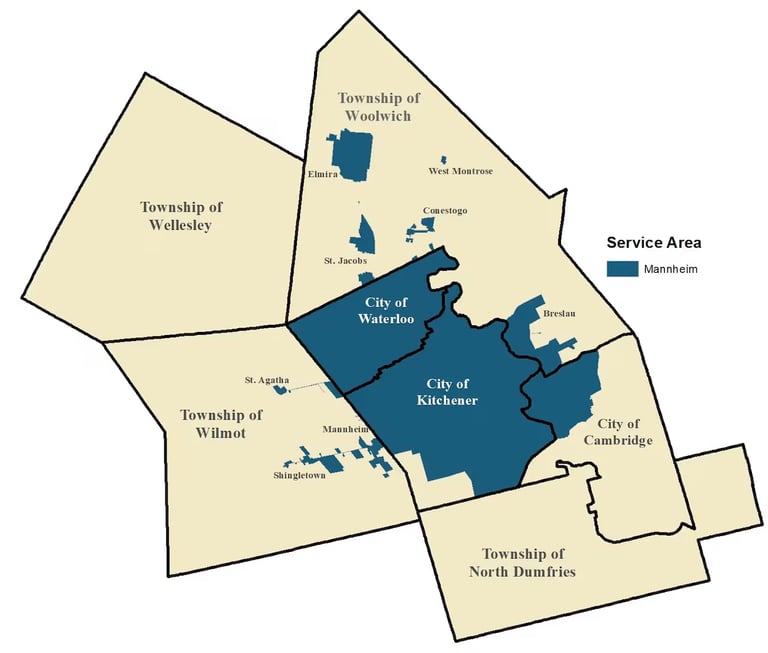
Map showing the Mannheim Service Area in Waterloo Region. (Region of Waterloo)
Water Capacity Concerns
Mathieu Goetzke, acting chief administrative officer for the Region of Waterloo, said the region currently has enough water capacity in the Mannheim Service Area and residents do not need to change their current consumption habits.
However, he said additional water resources will be needed to support future population growth.
Potential solutions being considered include water conservation programs, infrastructure investments such as new wells and treatment upgrades, and regional planning that better aligns development with available water resources.
Growth and Limited Resources
Development and Planning Challenges
Water capacity concerns have affected some development projects in Waterloo Region. Several proposals, including plans for a new regional hospital and a residential development at the former Kraus Factory property in north Waterloo, have faced delays related to infrastructure capacity.
What Happens Next?
Regional officials say future decisions will require balancing population growth, infrastructure planning and long-term water sustainability.